top of page
Dialogues in Design
Dialogues in Design
by Nikita Daptardar
by Nikita Daptardar
Dancing Systems - Choreographing Space Through Movement and Interaction
Inspired by the choreography of Fred Astaire and Ginger Rogers, this project explores movement as a spatial and structural system. Through rotoscoping, mapping, and material experimentation, the dancers’ interactions were translated into curves, tensions, and evolving geometries.
Their choreography was interpreted as two interdependent systems revolving around a shared axis, negotiating control and fluidity, rigidity and softness. Iterative explorations responded to the constraints of fabrication: creating a self-supporting model that touches all sides of a 25 cm cube without adhesive. The resulting form captures choreography not as frozen motion, but as a continuous spatial dialogue.
Concept
At the core of the project is the idea that movement is not just performance, but an architectural condition.
The choreography of Fred Astaire and Ginger Rogers is defined by precision, flow, and continuous negotiation between two bodies in space. This project interprets that relationship as a spatial system, where tension, alignment, and separation become tools for generating form.
Methodology
The project was developed through a series of analytical and design processes:
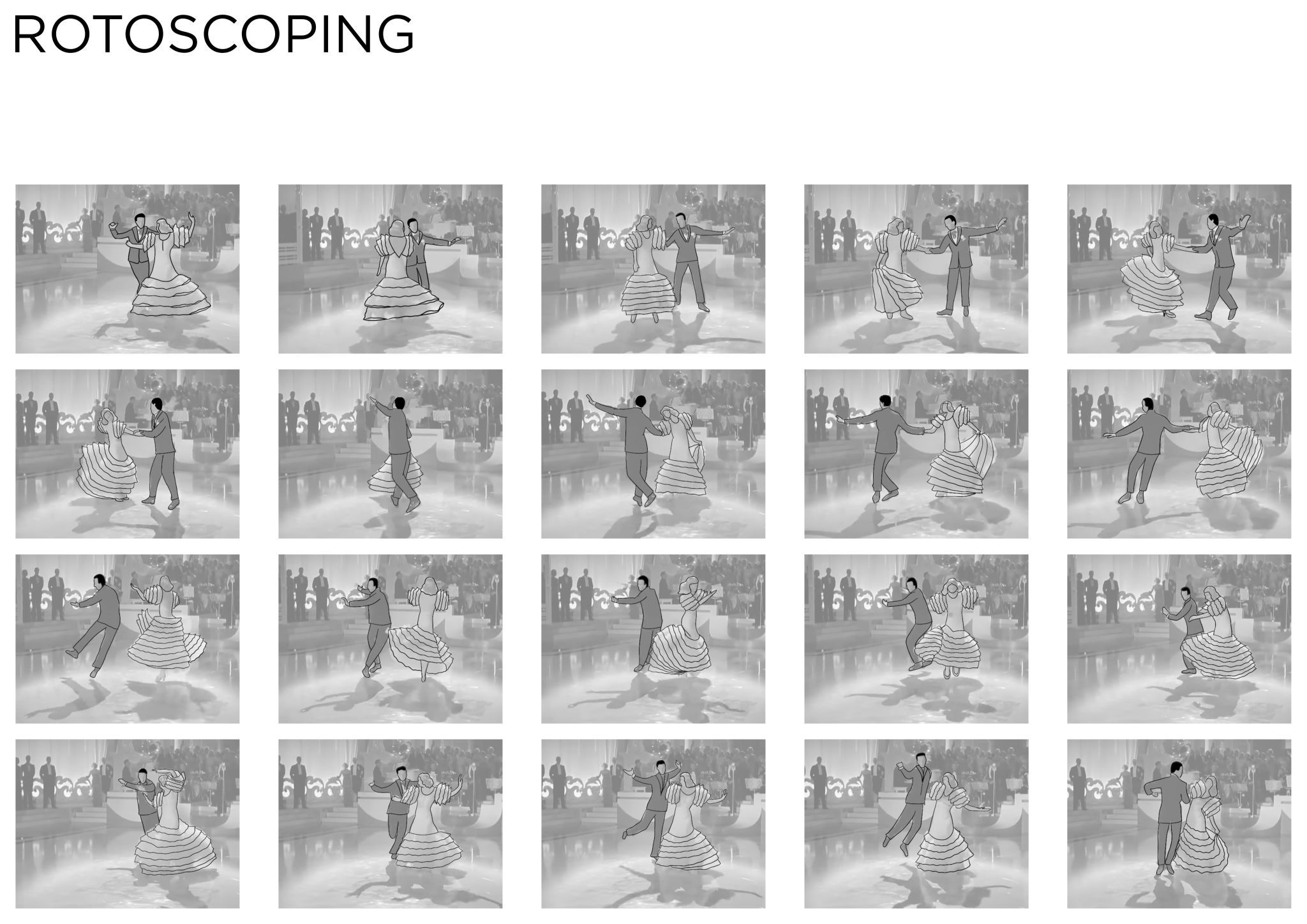
Rotoscoping: tracing movement sequences from film to capture spatial trajectories
Mapping: translating motion paths into diagrams of force, rhythm, and density
Spatial translation: converting diagrams into architectural conditions and spatial sequences
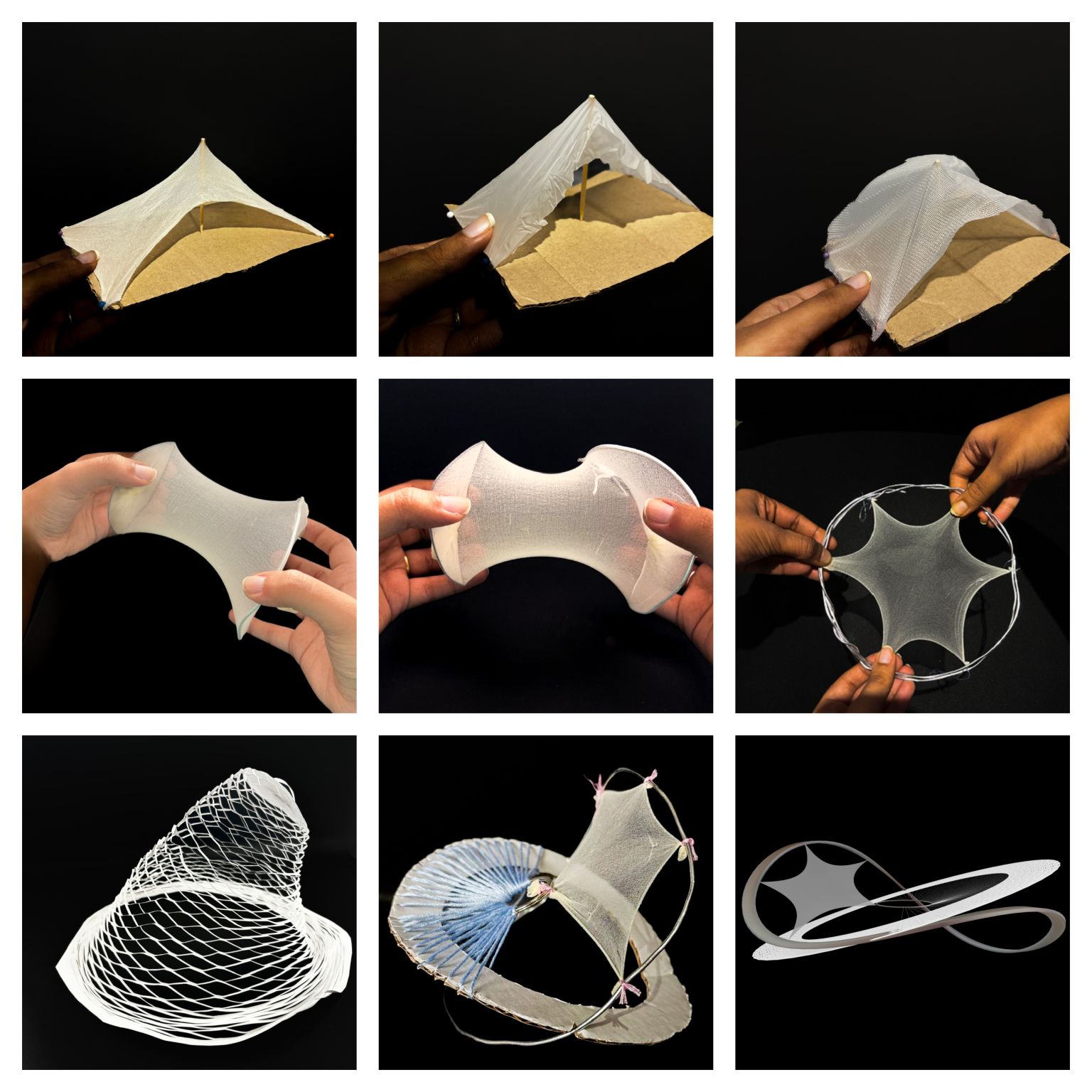
Material experimentation: testing how movement-driven geometries behave in physical form
Outcome
The final outcome is a set of spatial studies that function as both diagrams and environments. These studies explore how choreography can inform architectural order, not as static composition, but as continuous movement frozen in space.
Reflection
This project challenged the boundary between performance and architecture, treating the body as a tool for design rather than a subject within it. It suggests a way of designing where space is not composed, but performed into existence.

01
Dancing Systems - Choreographing Space Through Movement and Interaction
01
A 10 second dance video was selected and each frame was outlined, to understand the systems

02
Each frame was studied to derive the language and relation between the dancers.

03
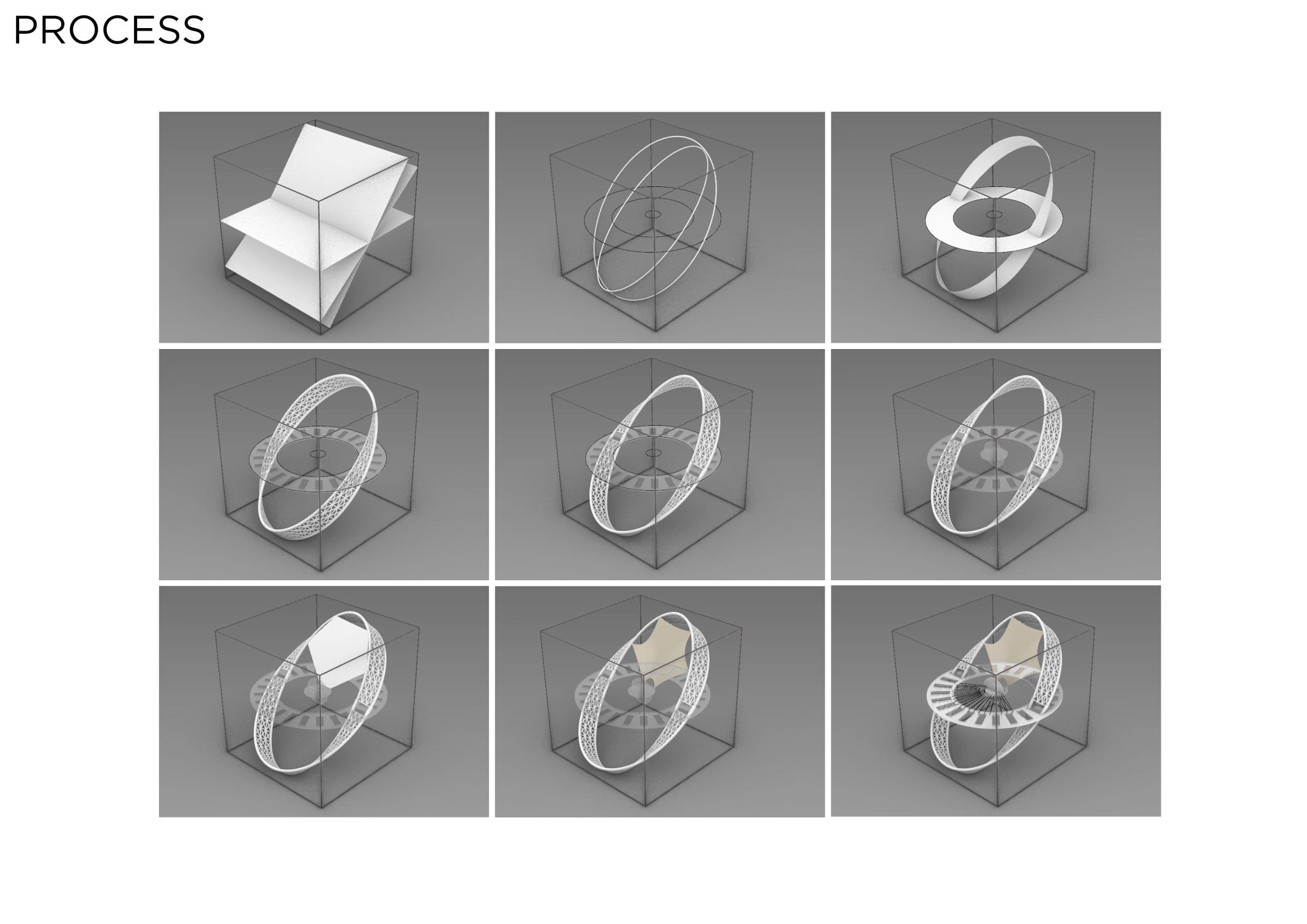
The movement between the dancers was translated to as two systems, and the interactions between the systems was captured.

04
Various materials were tested and their nature was studied to derive inspiration for the form and keep the language of the systems intact.

05
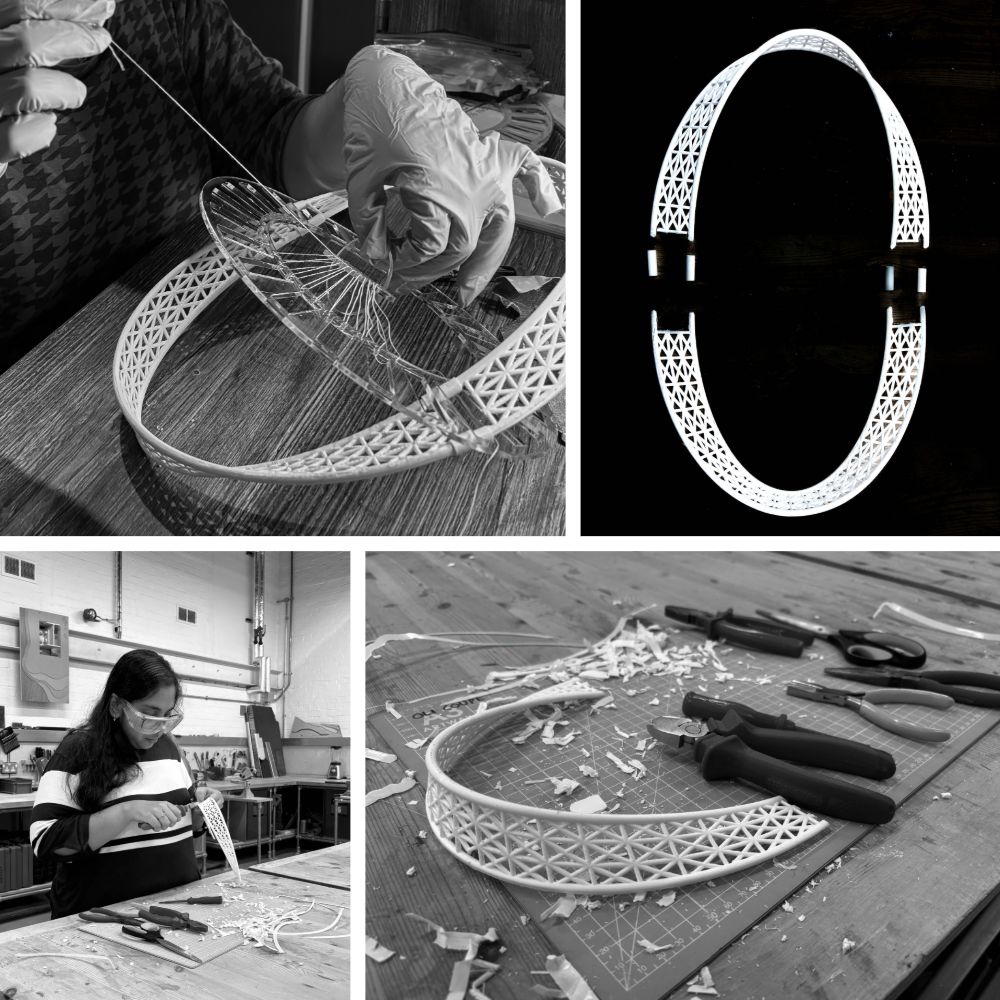
The model was 3D printed, laser cut and then assembled by hand. The assembling of the model required precision and accuracy to ensure the systems show their individuality but also communicate with each other.

06
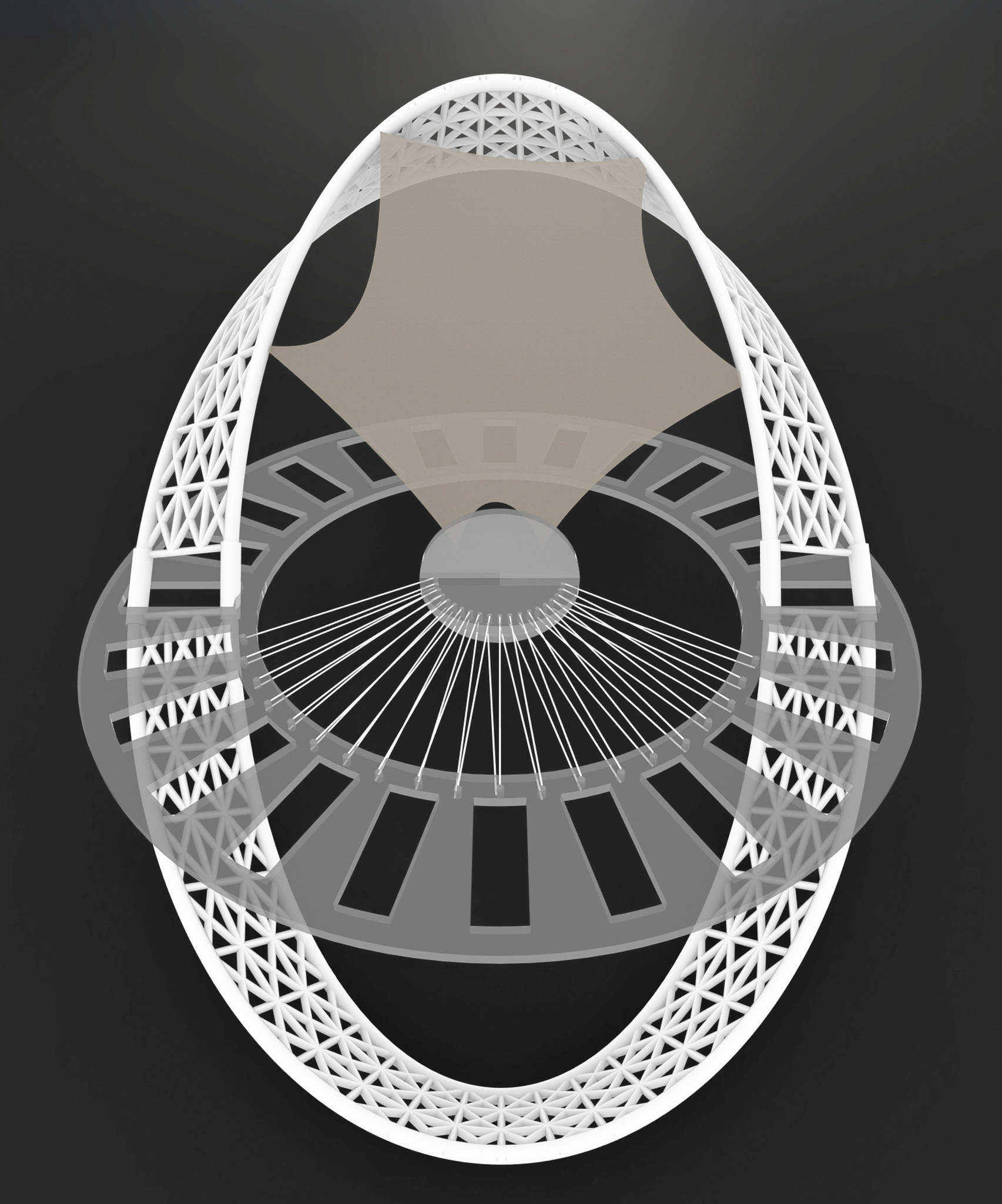
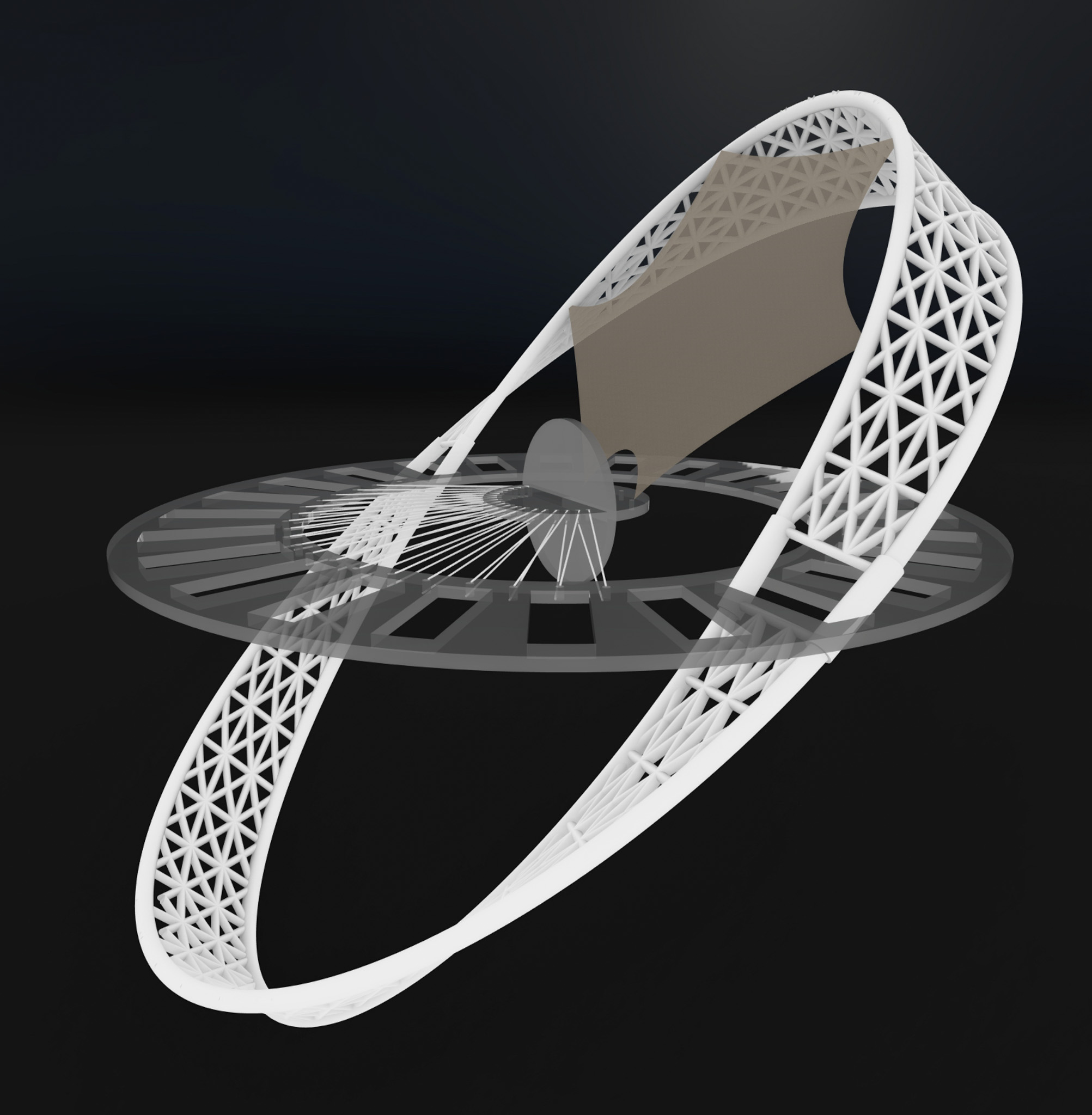
A render of the model. Various visualisations were done to imagine the model in space prior to building it.

07
Another render showing the two different systems, different axes bought together by a common centre.

08
The physical model, with different materials representing the dancers and their dance expressions.
- Dancing Systems - Choreographing Space Through Movement and Interaction
- Dancing Systems - Choreographing Space Through Movement and Interaction
- Dancing Systems - Choreographing Space Through Movement and Interaction
- Dancing Systems - Choreographing Space Through Movement and Interaction
- Dancing Systems - Choreographing Space Through Movement and Interaction
- Dancing Systems - Choreographing Space Through Movement and Interaction
- Dancing Systems - Choreographing Space Through Movement and Interaction

bottom of page